Toti Scialoja

Toti Scialoja
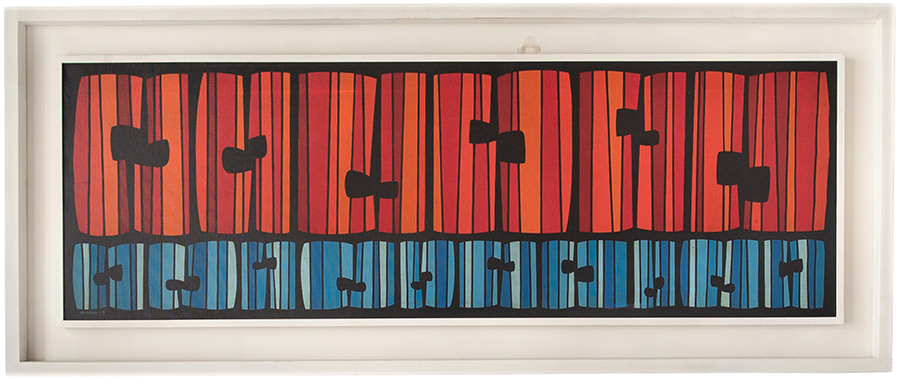
Abstract Background
1967
70 x 134 cm
Vinyl on canvas/h5>
Space, time, matter, gesture, represent the main directions towards which Scialoja's painting moves, in particular since, in the fifties, the artist accesses the expressive sphere of the Informal and becomes one of the most significant. His beginnings, which took place in the previous decade, saw him work in the wake traced by the Roman School, and consequently resort to linguistic codes of expressionist matrix. A subsequent phase of experimentation, which has as its reference the historical value of the Cubist experience - an investigation shared by many Italian artists of the period - is decisive for generating a reflection on the possible autonomy of painting in relation to the image of reality. The landing on pure abstraction, the need to connect the dimension of space, already implicit in his painting, to that of time, soon find an expressive formulation in the element of the imprint, brought back onto the canvas using papers previously soaked in pigment. . Footprint understood as a trace, therefore memory; repeated until creating sequences, therefore rhythms. The practice of rhythmically marking the space, not only through imprints, but also with the juxtaposition of surfaces painted with bright colors, will re-emerge in the late sixties, after a phase characterized by a more gestural pictorial approach: a precious example Abstract work, published here. With his teaching at the Academy of Fine Arts in Rome, Scialoja has influenced the training of important contemporary Italian artists; according to Gianni Dessì, his former pupil, the one postponed by his works is an image "that finds time, that asks for time as only great works can do".
Other Artists
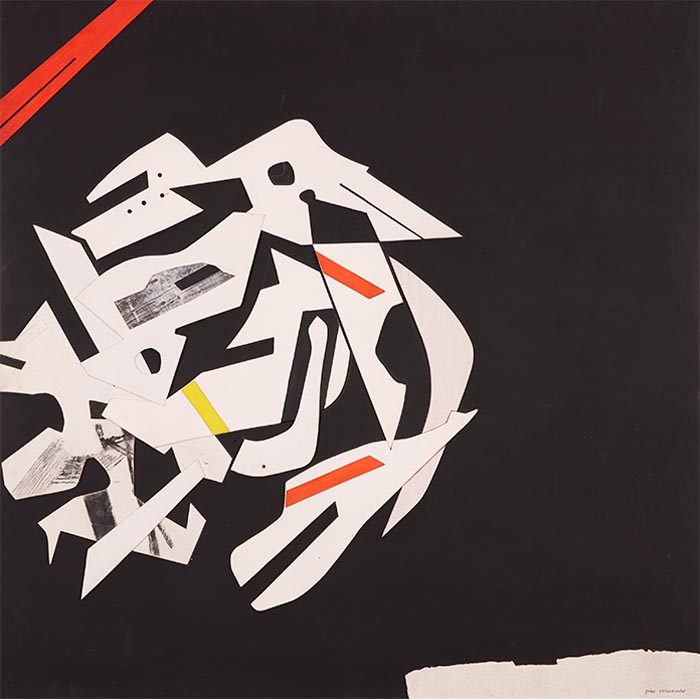
Gino Morandis
Front and back composition
1970
100 x 100 cm
Mixed technique on wood
María Freire
Variant series
1971
45.5 x 135 cm
Acrylic on canvas
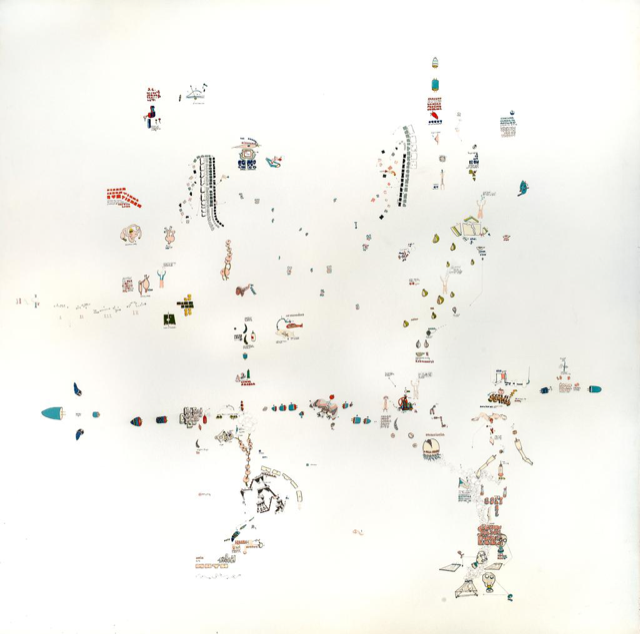
Gianfranco Baruchello
Gianfranco Baruchello
Eros ecumenico post industriale
1970
125x125
Mixed tecnic on aluminium