Mario Merz

Mario Merz
Untitled
1974
114 x 116 cm
Acrylic on paper applied on canvas
Merz's work aims to establish a correspondence between distant physical and cultural dimensions, when not opposite. His works stand as a moment of identification between the organic and inorganic spheres, between the elements of nature and the products of industry, between biological processes and artistic processuality. Merz appropriates materiality and representative substances of such contexts, emphasizing their implicit expressive energy. Neon tubes, wooden bundles, hay bales, pigments, metal elements, leather, shells represent the basis for assembly processes, or they concretize a design aimed at dominating the space with strong plastic presence. The propensity of his work to highlight structures - material as well as intellectuals - of a primary character, makes him one of the most emblematic figures of Arte Povera. Between the end of the sixties and the early seventies, the artist identifies in the shape of the igloo, in the famous mathematical sequence of Fibonacci, in the element of the table three conceptual keys to interpret and describe the world. The igloo is the archetype of the house, it refers to the cosmos and nomadic life; Fibonacci's numerical progression, represented through various graphic and performative modalities, summarizes the development process of some organisms and natural phenomena; the table is the place around which human beings gather, but also where the liturgy and creativity take shape. The work presented here leads back to performative actions in which the number of people invited to sit around the tables, as well as the spiral configuration identified by the arrangement of them, still recall the Fibonacci numerical series.
Other Artists
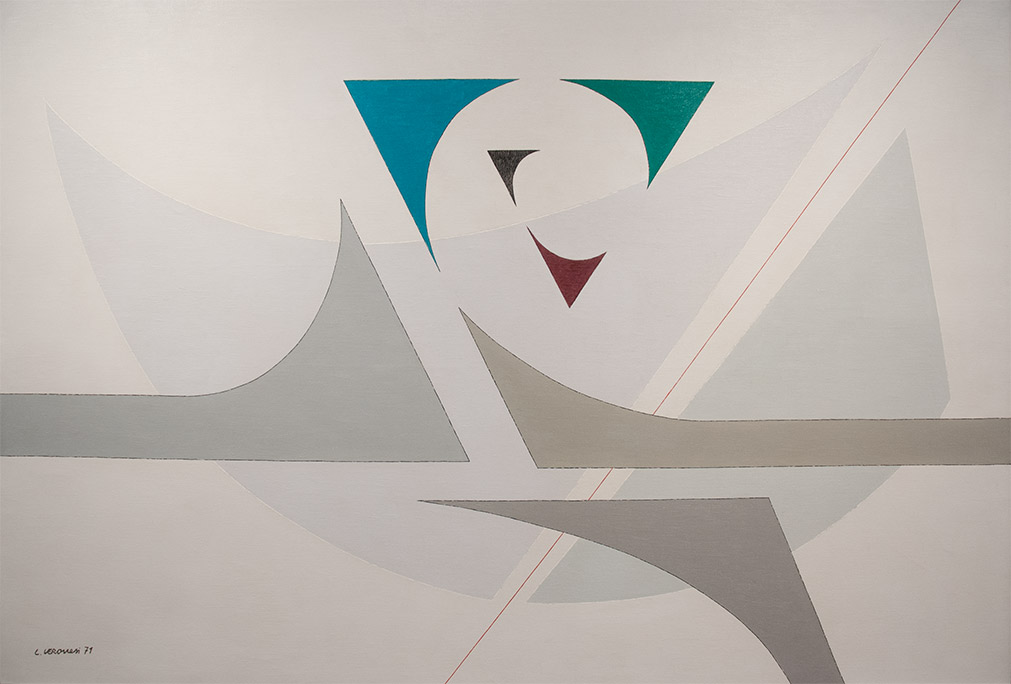
Luigi Veronesi
Composition A 71
1971
100 x 150 cm
Oil painting on canvas
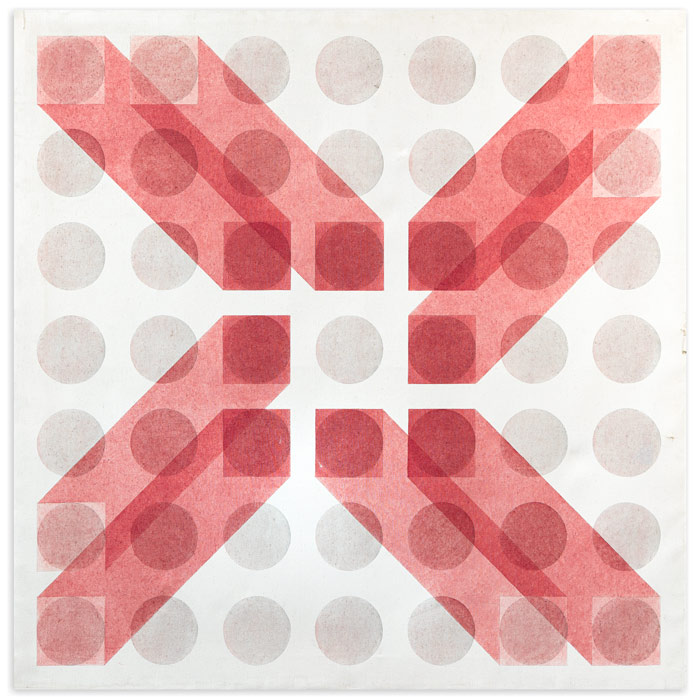
Carlo Nangeroni
Elementi Dinamici B
1972
150 x 150 cm
Acrylic on canvas
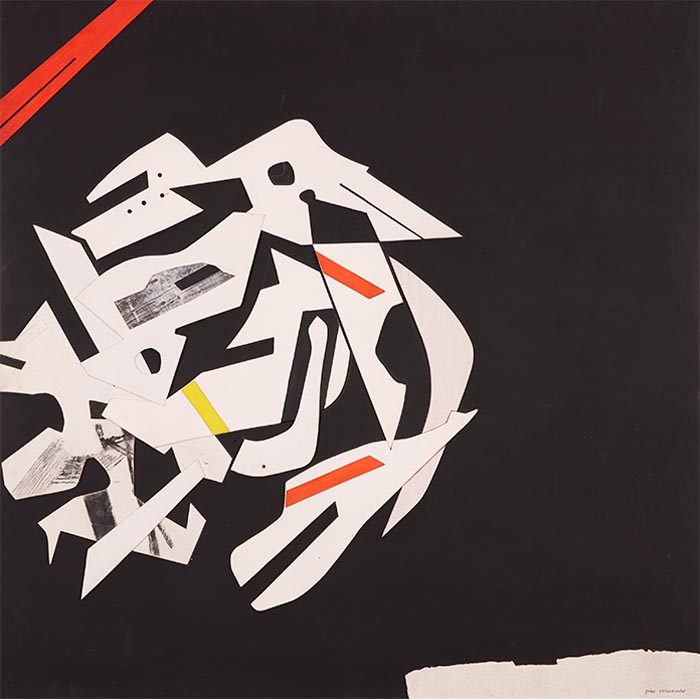
Gino Morandis
Front and back composition
1970
100 x 100 cm
Mixed technique on wood